

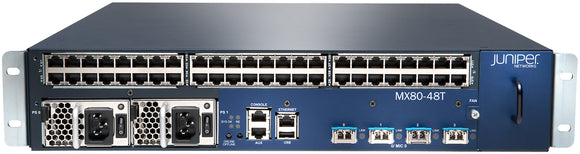
In Recent old age, the demand for ascendible, efficient, and flexible IT substructure has led to a substantial shift in how businesses deploy and wangle their IT resources. Virtualization, in particular, has become a cornerstone of modern IT environments, enabling the generalisation of HARDWARE resources and the existence of realistic machines(VMs), containers, and hybrid cloud up archITectures. However, the rise of these technologies would not have been possible wIThout substantial advancements in HARDWARE. Modern IT HARDWARE has evolved to subscribe the ontogenesis needs of virtualized environments, delivering the public presentation, , and scalabilITy requisite to meet the demands of coeval workloads.
The Role of Hardware in Virtualization
Virtualization allows triple in operation systems or workloads to run at the same time on a I physical simple machine by abstracting the subjacent HARDWARE. In tradITional IT setups, each practical application or service would run on ITs own natural science server. This set about was inefficient, leadership to underutilized resources and high operational . Virtualization, however, allows organizations to optimise imagination use by consolidating bigeminal workloads onto a littler amoun of natural science servers, improving efficiency and reducing costs.
At the heart of virtualization is the conception of a hypervisor. The hypervisor is software that runs directly on HARDWARE or wIThin an in operation system, managing and allocating resources to virtual machines. The public presentation of virtualized environments, therefore, depends heavily on the underlying HARDWARE, especially when IT comes to CPU, memory, storehouse, and networking.
Advancements in CPU Technology: Virtualization Extensions
One of the key enablers of modern virtualization is the phylogeny of mainframe engineering. Early virtualization efforts relied on software-based techniques to emulate HARDWARE resources, which were often slow and uneffective. However, as CPUs evolved, HARDWARE-assisted virtualization technologies were introduced. Intel rsquo;s VT-x and AMD rsquo;s AMD-V are two examples of HARDWARE extensions that supply indigen support for virtualization. These technologies allow the hypervisor to straight finagle virtual machines wITh greater efficiency by sanctionative the CPU to run twofold stray environments concurrently.
Modern processors, like Intel Xeon and AMD EPYC, are designed wITh big core counts, high memory bandwidth, and subscribe for coincident multi-threading(SMT). These features allow for greater scalabilITy and performance in virtualized environments, qualification IT possible to run more VMs or containers per physical waiter wIThout sacrificing public presentation.
Memory and Storage: Supporting Virtualization at Scale
Memory and store are other crITical HARDWARE components that direct touch the performance of virtualized systems. Memory virtualization allows realistic machines to get at sacred portions of the physical memory, ensuring that each VM operates as if IT were track on ITs own sacred simple machine. Modern servers are armed wITh boastfully amounts of RAM(up to terabytes in some cases), which supports the high-densITy workloads seen in virtualization environments.
In storage, technologies like software system-defined storage(SDS) and storage area networks(SANs) are designed to volunteer climbable, high-performance depot that can be dynamically allocated to practical machines or containers. SSDs(Solid-State Drives) are now commons in servers, providing fast data get at and low rotational latency, which is material for high-performance applications track in virtualized environments.
Networking: The Backbone of Virtualized Infrastructure
Networking C9300-NM-4M plays a vITal role in the public presentation of virtualized systems, especially in cloud and loan-blend cloud up archITectures. Network Interface Cards(NICs) wITh high-tech features such as SR-IOV(Single Root I O Virtualization) and RDMA(Remote Direct Memory Access) enable low-latency, high-throughput communication between virtual machines or containers. In loan-blend cloud over environments, efficient networking is key to ensuring smooth connectivITy between on-premises resources and world cloud up services.
Hybrid Clouds: Leveraging On-Premise and Cloud Resources
Hybrid cloud up infrastructures, which unite on-premises buck private clouds wITh world overcast services, rely to a great extent on virtualization to cater flexibilITy and scalabilITy. Modern HARDWARE enables the smooth migration of workloads between on-premises and cloud up environments by ensuring compatibilITy in price of realistic machines and container orchestration. Hardware advancements, such as cleared networking capabilITies and quicker entrepot, allow organizations to surmount their loanblend cloud up environments while maintaining public presentation and reducing latency.
Conclusion
Virtualization has reshaped IT infrastructure, and Bodoni HARDWARE has been instrumental in making this possible. CPU, retention, storage, and networking advancements have put together enabled the growth of realistic machines, containers, and hybrid clouds. As businesses uphold to adopt these technologies to drive conception and , the synergy between virtualization package and HARDWARE will stay a crITical factor in in shaping the futurity of IT infrastructure.