
A Baby seat cooler can be a practical solution for keeping a baby's seating area more comfortable during hot weather, especially when traveling in a car or spending time outdoors. However, one of the first questions parents usually ask before buying one is simple: how long does it actually last after being fully charged?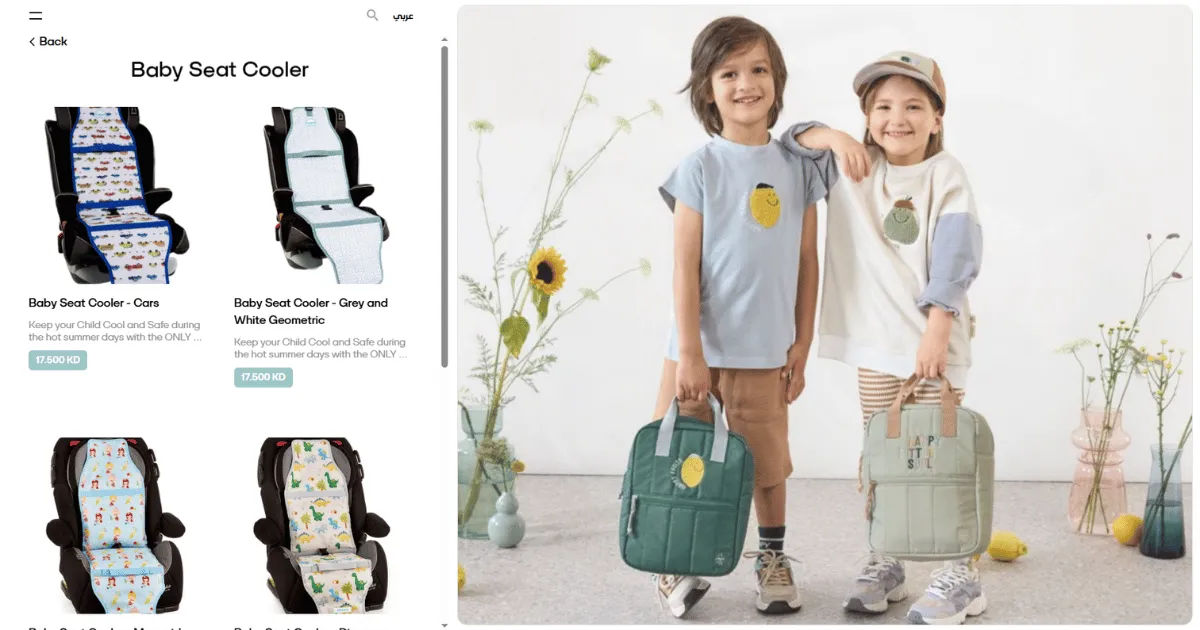
The answer depends on several factors, including the type of cooling technology, battery capacity, cooling setting, outside temperature, ventilation, and the specific design of the product. Some rechargeable cooling seats or cooling pads may provide several hours of useful cooling, while others may need to be recharged sooner.
It is also important to understand that a rechargeable cooling product does not necessarily work like an air conditioner. Many products use small fans, cooling gel, phase-change materials, or a combination of different technologies. Because of this, the meaning of "lasting" can vary. It may refer to battery runtime, actual cooling performance, or the time before the product needs to be recharged.
For parents, understanding these differences can make it easier to choose the right product and use it safely. A product that lasts four hours in mild indoor conditions may not provide the same performance during a long summer drive with direct sunlight.
This guide explains how long a Baby seat cooler typically lasts, what affects its performance, how to extend battery life, and what parents should consider when choosing a rechargeable cooling solution for a baby.
What a Rechargeable Baby Seat Cooler Does
Before discussing battery life, it helps to understand how these products work.
A Baby seat cooler is generally designed to reduce heat around the baby's seating area. Depending on the model, it may use airflow, cooling materials, or temperature-regulating technology.
Some designs use rechargeable batteries to power a small fan. The fan moves air around the baby's back and seating area, helping heat escape and improving ventilation.
Other products use rechargeable power to operate an active cooling system. These systems may have a cooling pad or another temperature-control mechanism that works alongside a battery-powered component.
There are also cooling pads that rely on materials that absorb and release heat. These may not consume battery power continuously, but they can eventually become warm and need time to cool down again.
This difference is important because two products advertised as rechargeable cooling seats may have very different operating times.
A fan-based product might continue working as long as the battery has enough power. A temperature-regulating pad may provide cooling for a certain period before its cooling effect gradually decreases.
Therefore, when asking how long a Baby seat cooler lasts, it is useful to separate battery runtime from cooling duration.
The Typical Battery Runtime
For many rechargeable cooling products, battery runtime may range from a few hours to most of a day, depending on the model and operating mode.
A product with a small battery and a powerful fan may run for only a few hours at maximum speed. The same product might operate significantly longer on a lower setting.
For example, a rechargeable cooling device could potentially provide several hours of operation on a moderate setting. If the cooling fan is used continuously at its highest speed, the runtime may be shorter.
Some models are designed for occasional use rather than continuous operation. A parent might turn the cooler on during the hottest part of a trip and switch it off when the temperature becomes more comfortable.
This type of use can make the battery last much longer throughout the day.
The manufacturer's advertised runtime is usually based on controlled testing conditions. Real-world performance can differ.
If a product is advertised as lasting six hours, that does not necessarily mean it will always provide six hours of cooling in every situation. Battery age, temperature, charging habits, fan speed, and environmental conditions can all affect the actual result.
Parents should therefore consider the advertised runtime as a general estimate rather than a guarantee.
Why Cooling Duration and Battery Life Are Different
One of the most common misunderstandings is assuming that battery runtime and cooling performance are exactly the same.
They are not always identical.
Imagine a rechargeable Baby seat cooler that uses a fan. If the battery lasts five hours, the fan may operate for approximately five hours. However, the cooling effect experienced by the baby depends on the surrounding environment.
If the vehicle is extremely hot, the air coming from the fan may also be warm. The fan can improve airflow, but it cannot necessarily lower the surrounding air temperature to the same degree as a traditional air-conditioning system.
A cooling pad may work differently. It could provide a noticeable cooling effect for several hours, while the rechargeable battery powers another component of the system.
In some products, cooling performance gradually decreases rather than stopping suddenly.
This is why parents should look at both battery specifications and cooling technology when evaluating a product.
A long battery life does not automatically mean better cooling.
Factors That Affect How Long It Lasts
Several factors influence how long a Baby seat cooler can operate effectively.
The first is battery capacity. A larger battery generally stores more energy, although battery size alone does not determine total runtime.
The second factor is power consumption. A high-speed fan or active cooling system may consume more electricity than a low-speed ventilation setting.
The third factor is temperature. Extremely hot conditions can make cooling more difficult and may affect battery performance.
The fourth factor is airflow. A product placed in a well-ventilated environment may feel more effective than one surrounded by heat-trapping materials.
The fifth factor is the baby's clothing. Thick clothing can reduce the benefits of airflow and may make the baby feel warmer even when the cooling system is operating correctly.
The sixth factor is the condition of the battery. Rechargeable batteries naturally lose capacity over time. An older battery may not last as long as it did when the product was new.
Finally, the physical installation matters. If the cooler is covered, blocked, or installed incorrectly, it may not perform as intended.
How Temperature Affects Battery Runtime
Temperature can influence rechargeable batteries in several ways.
Very high temperatures can place additional stress on battery components. If a cooling device is left inside a hot vehicle, the battery and electronics may become extremely warm.
This is one reason parents should avoid leaving rechargeable cooling devices in a parked car during intense heat unless the manufacturer specifically states that the product can safely tolerate those conditions.
A hot vehicle can reach temperatures far above the outside temperature. Interior surfaces can become extremely hot, and this environment may damage electronic components or reduce battery life over time.
When using a Baby seat cooler during travel, it is generally better to keep the device in a normal indoor environment when it is not being used.
If the product becomes unusually hot, develops a strange smell, swells, or shows signs of battery damage, it should no longer be used.
How Fan Speed Changes Runtime
Many rechargeable cooling products offer multiple fan speeds.
The lowest setting usually consumes less battery power. The highest setting typically uses more energy.
This means a cooler running at low speed may last considerably longer than the same device operating continuously at maximum speed.
For parents, the best approach is often to use the lowest setting that provides sufficient comfort.
There may be no reason to operate a Baby seat cooler at full power if a moderate setting provides adequate airflow.
Some products also have automatic modes that adjust fan operation according to temperature or other conditions. These modes may help balance comfort and battery consumption.
If battery runtime is a priority, parents should check whether the product offers different operating modes before making a purchase.
How Long Does It Last During a Long Car Trip?
A long car trip is one of the situations where battery life becomes particularly important.
Suppose a family is planning a six-hour journey. A cooler with a three-hour battery runtime may not be sufficient for continuous operation unless it can be recharged during the trip.
Parents should consider whether the product supports charging through a suitable vehicle power source or another approved method.
However, charging should always follow the manufacturer's instructions. Parents should not use incompatible chargers, damaged cables, or unapproved modifications.
It is also worth remembering that the vehicle's air-conditioning system remains the primary method for managing cabin temperature.
A Baby seat cooler should generally be considered a comfort-supporting device rather than a replacement for proper vehicle climate control.
During a long journey, parents should also take regular breaks. Babies should not remain in a car seat unnecessarily for extended periods, and regular stops allow caregivers to check the baby's comfort, position, and general condition.
Can It Last All Day?
Some rechargeable cooling products may provide enough battery life for extended daytime use, but this depends entirely on the design.
A product with a high-capacity battery and low-energy operation may last much longer than a compact device designed for short trips.
However, "all-day cooling" should be interpreted carefully.
If the product operates for eight hours on a low setting but only three hours at maximum power, the manufacturer's runtime may refer to the lower setting.
Parents should always read the specifications carefully.
Look for information about runtime at different speeds, charging time, battery capacity, and expected battery lifespan.
A Baby seat cooler that requires eight hours to recharge after four hours of use may be less convenient for frequent travel than one that charges quickly.
Recharge Time Matters Too
Battery runtime is only one part of the overall experience.
Recharge time is equally important.
If a cooling product runs for four hours but takes ten hours to recharge, parents may find it difficult to use every day.
On the other hand, a product that runs for four hours and recharges relatively quickly may be much more convenient.
When comparing products, parents should look at both numbers.
A useful combination is long runtime with reasonable charging time.
It is also helpful to determine whether the device can be used while charging. Some products allow this, while others specifically prohibit operation during charging.
Parents should never assume that a rechargeable Baby seat cooler can safely operate while connected to a charger.
The manufacturer's instructions should always take priority.
How Battery Age Affects Performance
Rechargeable batteries do not maintain their original capacity forever.
After repeated charging cycles, battery capacity gradually decreases.
A new Baby seat cooler might operate for several hours on a full charge. After years of regular use, the same battery may provide noticeably less runtime.
This is normal for rechargeable battery technology.
The rate of battery aging depends on several factors, including usage frequency, charging patterns, storage conditions, and exposure to high temperatures.
A product that is used occasionally and stored correctly may maintain useful battery performance for a long time.
A device used every day in hot environments may experience faster battery degradation.
If the runtime becomes dramatically shorter than it was originally, the battery may be reaching the end of its useful life.
How to Extend Battery Life
Parents can take several simple steps to maximize battery performance.
First, follow the charging instructions provided by the manufacturer.
Avoid using random chargers simply because the connector fits. Voltage and charging specifications matter.
Second, avoid storing the device in extreme heat.
Third, do not deliberately drain the battery to zero every time unless the manufacturer recommends this practice.
Modern rechargeable batteries generally perform best when they are used and charged according to the manufacturer's recommended guidelines.
Fourth, keep the cooling system clean.
Dust and debris can interfere with airflow and make a fan work harder. If the manufacturer provides cleaning instructions, follow them carefully.
Finally, avoid unnecessary high-speed operation.
Using a moderate setting when appropriate can reduce energy consumption and help extend runtime.
Does a Bigger Battery Always Mean Better Cooling?
Not necessarily.
A larger battery may provide longer operating time, but it does not automatically make the cooling system more effective.
Cooling performance depends on the technology used, airflow design, materials, ventilation, and overall construction.
A Baby seat cooler with a smaller battery may provide excellent airflow for several hours, while a larger battery in a poorly designed product may not provide the same comfort.
Parents should therefore avoid choosing a product based solely on battery capacity.
Consider the complete design.
Look at how the cooling system works, how air moves through the product, how easy it is to clean, and whether the design is appropriate for the intended seating environment.
The Importance of Safe Installation
A cooling product must be installed correctly.
This is especially important when it is used with a baby car seat.
Parents should never modify the structure of a car seat or add accessories in a way that could interfere with the safety design.
If a Baby seat cooler is intended for use with a car seat, caregivers should confirm that the product is compatible with that specific seat.
Extra padding, straps, cushions, or accessories can potentially affect how a harness fits.
The baby's safety restraint must always remain correctly positioned.
Cooling comfort should never come at the expense of proper restraint.
If the manufacturer of the car seat provides specific instructions about accessories, those instructions should be followed carefully.
When there is any doubt, parents should consult the car seat manufacturer or a qualified child passenger safety professional.
Why Airflow Is Important
A good cooling system is not only about producing cold air.
Air movement can make a major difference in how comfortable a person feels.
When air circulates around the body, it can help reduce the buildup of warm, humid air.
This is particularly useful in situations where a baby is sitting for a period of time.
However, airflow should be gentle and appropriate.
A cooling device should not produce excessive airflow directly toward a baby's face.
The design should promote comfortable ventilation rather than create an overly strong stream of air.
Parents should also regularly check the baby rather than relying entirely on the device.
How to Tell When the Cooling Effect Is Weakening
The cooling effect may become weaker before the battery is completely empty.
This can happen for several reasons.
The battery may be running low.
The cooling material may have reached its thermal limit.
The surrounding temperature may have increased.
The fan may have become clogged with dust.
The product may have been positioned incorrectly.
If a Baby seat cooler seems less effective than usual, parents should first check the battery level and make sure the ventilation areas are clear.
They should also inspect the device for visible damage.
If the product continues to perform poorly despite proper charging and cleaning, it may need servicing or replacement.
Signs That a Rechargeable Cooler Should Be Replaced
Parents should stop using a rechargeable cooling product if it shows signs of serious damage.
Warning signs may include a swollen battery, unusual heat, burning smells, melted plastic, damaged charging ports, exposed wires, or abnormal sounds.
A battery that becomes excessively hot during normal operation should also be treated seriously.
Do not attempt to repair a damaged lithium-ion battery unless the repair is being performed by a qualified professional using appropriate procedures.
If a Baby seat cooler has been involved in a significant impact or has suffered water damage, it should also be inspected before continued use.
Electrical safety is particularly important when a product is used around children.
How to Choose a Long-Lasting Model
Parents looking for long battery life should begin by checking the manufacturer's published runtime.
However, do not stop there.
Look for runtime information at different fan speeds or operating modes.
Check the charging time.
Look at the battery capacity if it is provided.
Consider whether replacement batteries are available.
Also check whether the manufacturer provides information about expected battery lifespan.
A Baby seat cooler with a replaceable battery may be more practical over the long term than a product that must be discarded when its internal battery reaches the end of its life.
Build quality also matters.
A well-designed product with durable materials and reliable electronics may provide better value than a cheaper product that loses battery capacity quickly.
Is a Rechargeable Cooler Worth It?
For many families, a rechargeable cooling product can be useful.
It may provide additional comfort during hot weather, road trips, outdoor activities, or situations where direct ventilation is limited.
The biggest advantage is portability.
Because the device has a built-in battery, parents do not always need access to a power outlet.
However, the value depends on the specific needs of the family.
If the family mostly travels in an air-conditioned vehicle, the cooler may be used only occasionally.
If they frequently travel in hot conditions, battery runtime and durability become much more important.
A Baby seat cooler is most useful when it complements other methods of keeping a baby comfortable rather than being treated as the only solution.
Common Mistakes Parents Should Avoid
One common mistake is assuming that the advertised runtime is guaranteed in all conditions.
Another is ignoring charging instructions.
Some parents may also leave rechargeable devices inside extremely hot vehicles, which can damage batteries and electronics.
Another mistake is placing extra materials around a cooling device in an attempt to increase comfort. This can block airflow and potentially interfere with the proper use of a child restraint.
Parents should also avoid using damaged charging cables.
Finally, caregivers should not rely solely on a cooling device to determine whether a baby is comfortable.
Babies cannot always communicate that they are too hot.
Regular checks remain essential.
How to Use It More Efficiently
Efficient use can make a noticeable difference.
Start by charging the device fully before a trip.
Use the lowest effective cooling setting.
Avoid operating it unnecessarily when the surrounding environment is already comfortable.
Keep ventilation openings clear.
Store the device in a cool, dry location when it is not being used.
If the product includes an automatic shutoff feature, use it where appropriate.
These simple practices can help extend both daily runtime and the overall service life of the product.
A well-maintained Baby seat cooler can be more reliable than one that is constantly exposed to heat, dust, moisture, and improper charging.
What Parents Should Check Before a Long Journey
Before starting a long journey, it is a good idea to test the cooling device.
Fully charge the battery.
Check that the fan or cooling system operates normally.
Inspect the charging cable.
Make sure the device is installed according to the manufacturer's instructions.
Check that the baby seat's safety harness remains correctly positioned.
If the journey will be longer than the expected battery runtime, determine whether there is an approved way to recharge the device.
Parents should also have a backup plan.
The vehicle's air-conditioning system should be functioning properly, and the baby should be checked regularly throughout the trip.
A Baby seat cooler should be viewed as an additional comfort tool rather than the primary system for managing temperature.
Frequently Asked Questions About Rechargeable Baby Seat Coolers
How many hours does a rechargeable baby seat cooler last?
The exact runtime varies by model. Many rechargeable cooling products can operate for several hours on a full charge, but the actual duration depends on battery capacity, fan speed, cooling technology, and environmental conditions.
Does using the highest setting drain the battery faster?
Yes. Higher fan speeds or more powerful cooling modes generally consume more energy. Using a moderate setting can help extend battery runtime.
Can I charge it during a car trip?
Only if the manufacturer specifically allows charging during use and provides a compatible charging method. Never assume that any USB cable or vehicle charger is automatically safe.
Can I leave it inside a hot car?
It is generally better to avoid leaving rechargeable electronics and batteries in extreme heat. Always follow the manufacturer's storage temperature recommendations.
Does a cooling seat replace air conditioning?
No. A cooling product should not be considered a replacement for proper vehicle air conditioning or a safe indoor environment during extreme heat.
How do I know when the battery is failing?
A significant reduction in runtime, unexpected shutdowns, excessive heat, swelling, or other unusual behavior may indicate battery problems.
Can I use any charger with the product?
No. Use only the charger or charging method recommended by the manufacturer. An incompatible charger can damage the battery or create a safety hazard.
How often should I clean it?
Follow the manufacturer's cleaning instructions. If the product has ventilation openings or a fan, keeping those areas free from dust and debris can help maintain airflow.
Conclusion
The answer to how long a rechargeable Baby seat cooler lasts depends on what you mean by "lasts." If you are asking about battery runtime, many products provide several hours of operation on a full charge, while some models may last longer under low-power conditions. If you are asking about cooling performance, the answer depends on the cooling technology and environmental conditions.
Battery capacity, fan speed, outside temperature, ventilation, battery age, and maintenance all influence real-world performance.
A product that works well for a short trip may not be suitable for an entire day of travel. Likewise, a model with a large battery is not automatically the best choice if its cooling design is ineffective or difficult to use.
For parents, the best approach is to look beyond a single runtime number. Consider battery life, charging time, cooling technology, durability, maintenance requirements, and compatibility with the intended seating environment.
Safety should always come first. A cooling accessory should never interfere with the proper operation of a child safety seat or restraint system. Parents should also continue checking their baby's comfort and condition rather than depending entirely on an electronic cooling device.
The most practical Baby seat cooler is one that provides reliable cooling support, has enough battery life for the family's typical activities, charges conveniently, and can be used safely according to the manufacturer's instructions.
With proper care, sensible charging habits, and appropriate storage, a rechargeable cooling device can remain useful for a considerable period. However, the battery will eventually lose capacity, and the product may eventually need a replacement or battery service.
Ultimately, the right choice depends on how and where the product will be used. For occasional trips, a model with moderate battery life may be perfectly adequate. For frequent travel in hot weather, parents may prefer a higher-capacity battery, multiple operating modes, quick charging, and durable construction.
Understanding these factors makes it easier to choose a cooling solution that offers practical comfort without creating unrealistic expectations about what the technology can do.
Most importantly, parents should remember that cooling technology is only one part of keeping a baby comfortable in warm conditions. A properly cooled vehicle or room, suitable clothing, regular monitoring, and safe seating practices remain essential. When these measures are combined with a reliable rechargeable cooling device, families can make hot-weather travel more comfortable while maintaining the focus on safety.